
T: +86-177-2730-8850
E: yashe2002@163.com
E: yashe2002@163.com
Third industrial estate.caobian guangfo road dali nanhai district foshan Guangdong North Road No.4


Views: 0 Author: Site Editor Publish Time: 2026-03-06 Origin: Site


When customers ask us, “What is the best metal for hinges?”, the honest answer is not simply “the strongest metal” or “the cheapest option.” The best hinge metal depends on where the hinge will be used, how often it will open and close, what kind of load it must support, and what environmental conditions it will face over time. A hinge on a lightweight cabinet door has very different needs from a hinge on an exterior gate, a bathroom door, or an industrial enclosure. That is why material selection is one of the most important decisions in hinge performance.
At the same time, one material has become increasingly popular in modern hardware applications: the Aluminium Hinge. It is valued for its balance of corrosion resistance, light weight, clean appearance, and practical durability in many indoor and semi-outdoor uses. In our experience, aluminium is often the right answer when customers want a hinge that performs reliably without adding unnecessary weight or requiring heavy maintenance.
A hinge may look like a small hardware component, but it handles repeated movement, friction, alignment, and load transfer every single day. If the metal is not suitable, common problems can appear quickly:
corrosion or surface staining
squeaking and wear
sagging from insufficient strength
deformation under repeated load
poor finish durability
difficulty in installation due to excess weight
So when choosing a hinge, the question is not just “Will it fit?” It is also:
Will it stay smooth over time?
Will it resist moisture or humidity?
Will it match the weight of the door or panel?
Will it keep a clean appearance after long use?
That is why metal selection should always come before price-only decisions.
Most hinges in the market are made from one of these materials:
Aluminium
Stainless steel
Carbon steel
Brass
Zinc alloy
Each material has strengths and limitations. The “best” option depends on application, not marketing language.
An Aluminium Hinge is usually chosen when the application needs a practical balance of:
light weight
corrosion resistance
modern appearance
easy handling
stable day-to-day performance
Compared with heavier metals, aluminium reduces the overall weight of the hardware system. This can matter a lot in products like:
aluminium doors and windows
cabinets
equipment covers
access panels
lightweight gates or enclosures
Because aluminium naturally resists rust better than untreated steel, it is also a practical option in humid environments where appearance and maintenance matter.
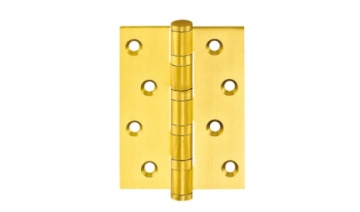
Aluminium is one of the most practical hinge materials for modern applications. It is not the heaviest-duty choice in every situation, but it offers excellent all-around value.
Key advantages:
lightweight and easy to install
naturally corrosion-resistant
clean, modern finish
suitable for many indoor and light outdoor applications
often ideal for matching aluminium frames and profiles
Best for:
doors and windows with aluminium frames
cabinets and furniture
utility access panels
humid indoor spaces
applications where weight matters
Things to consider:
for extremely heavy doors, stainless steel or heavy-duty steel may still be preferred
application design and hinge thickness still matter, even with a good material
In many practical projects, an Aluminium Hinge is the best choice when you want reliable performance, attractive appearance, and easier handling without excessive hardware weight.
Stainless steel is widely known for strength and strong corrosion resistance. It is often selected for heavier-duty or more demanding environments.
Key advantages:
very strong
excellent corrosion resistance
durable in humid and exposed environments
suitable for high-frequency use
Best for:
exterior doors
marine-adjacent environments
commercial and industrial doors
heavy gate and panel applications
Things to consider:
heavier than aluminium
often more expensive
may be more than necessary for lighter structures
Stainless steel is excellent, but it is not always the most efficient or cost-effective choice if the application does not need that level of strength.
Carbon steel hinges are common because they can be cost-effective and strong. However, untreated carbon steel is more vulnerable to rust.
Key advantages:
strong and widely available
cost-effective for many standard applications
suitable for load-bearing designs when properly finished
Best for:
indoor doors
general hardware applications
budget-conscious projects where protective coating is acceptable
Things to consider:
requires protective coating to resist corrosion
coating damage can lead to rust
less ideal for humid or wet environments if maintenance is limited
Carbon steel can be a good functional choice, but it usually needs more attention to finish quality and long-term environmental exposure.
Brass is often selected for decorative or premium interior hardware.
Key advantages:
attractive appearance
naturally resistant to corrosion in many indoor settings
classic, warm visual style
Best for:
decorative doors
premium furniture
traditional interiors
Things to consider:
usually more expensive
softer than some stronger hinge metals
often chosen more for style than high-load performance
Brass is excellent for appearance-focused projects, but it is not always the most practical everyday solution for modern volume use.
Zinc alloy is common in lighter-duty decorative or furniture hardware.
Key advantages:
economical
can be cast into detailed shapes
suitable for decorative hardware
Best for:
light furniture
low-load interior applications
decorative fittings
Things to consider:
not ideal for high structural loads
less suitable for demanding repeated heavy-duty use
performance depends heavily on design quality
Zinc alloy can work well in the right light-duty application, but it is rarely the top choice when durability and structural reliability are the main priorities.
Metal Type | Main Advantage | Main Limitation | Best Use Case |
Aluminium | Lightweight + corrosion resistance | not ideal for the heaviest loads | doors, windows, cabinets, panels |
Stainless Steel | High strength + strong durability | heavier and often more expensive | heavy-duty, exterior, commercial use |
Carbon Steel | Strong + economical | can rust without good coating | general indoor hardware |
Brass | Attractive appearance | higher cost, softer metal | decorative interior use |
Zinc Alloy | Affordable, easy shaping | lower structural strength | light-duty furniture hardware |
The best metal depends on the application. But if we answer in a practical, real-world way:
For heavy-duty exterior or industrial use: stainless steel is often the strongest choice.
For decorative interior hardware: brass may be the preferred aesthetic choice.
For budget indoor hardware: coated carbon steel can be a workable solution.
For lightweight, corrosion-resistant, modern applications: Aluminium Hinge is often the best overall balance.
That last category is exactly why aluminium hinges have become so widely used. In many modern products, people do not need the heaviest hinge possible—they need the most efficient hinge for the job. Aluminium offers that balance.
A heavy hinge is not always better. In lightweight frames, cabinets, and doors, extra hardware weight can create unnecessary stress. Aluminium helps reduce that issue.
For a wide range of residential, commercial, and product-hardware uses, aluminium offers more than enough strength when the hinge is properly designed.
Humidity, kitchen use, bathroom conditions, and general air exposure are all common real-world conditions. Aluminium performs well in these environments compared with untreated steel.
If the door, frame, or hardware system already uses aluminium, an aluminium hinge creates a more consistent overall look and material match.
Installers often appreciate lighter hardware because it simplifies fitting, alignment, and transport—especially in larger quantity projects.
So, what is the best metal for hinges? The most accurate answer is: the best metal depends on the job. But for many modern applications—especially doors, windows, cabinets, and lightweight hardware systems—an Aluminium Hinge is one of the best all-around choices. It offers the practical balance that many customers actually need: corrosion resistance, low weight, clean appearance, and dependable daily performance.
If you are selecting hinge materials for your next project and want a solution that fits modern frames, practical installation, and long-term use, you can learn more at www.kaitegao.com. We believe the right hinge should do more than open and close—it should match the product, the environment, and the expectations of long-term performance. If you need help comparing hinge options or choosing the right aluminium hinge for your application, you are welcome to explore more product information there.
Yes. For many doors, windows, cabinets, and light commercial applications, an Aluminium Hinge provides reliable strength for regular daily use when correctly specified.
Not always. Stainless steel is often better for very heavy or highly demanding environments, but aluminium is often better when weight, corrosion resistance, and modern design balance are the priority.
Aluminium does not rust like untreated steel. This is one reason it is widely chosen for humid environments and low-maintenance applications.
In many cases, an Aluminium Hinge is one of the best choices because it matches the frame system well, keeps hardware weight lower, and provides a consistent appearance.