
T: +86-177-2730-8850
E: yashe2002@163.com
E: yashe2002@163.com
Third industrial estate.caobian guangfo road dali nanhai district foshan Guangdong North Road No.4


Views: 0 Author: Site Editor Publish Time: 2026-02-28 Origin: Site


When buyers compare hinge materials, the decision often looks simple at first: choose something strong enough to hold the door, panel, or cabinet in place. But in real projects, hinge performance is shaped by much more than basic load support. Moisture, cleaning chemicals, outdoor weather, frequent opening and closing, appearance requirements, and long-term maintenance all affect whether a hinge remains reliable or becomes a weak point in the product. That is exactly why a Stainless Steel Hinge is such a common choice across furniture, cabinets, industrial enclosures, marine hardware, and architectural applications.
From our perspective, stainless steel hinges are not only popular because they look clean and modern. They are valued because stainless steel combines corrosion resistance, strength, durability, and stable long-term appearance in one material. Stainless steel’s corrosion resistance comes from its chromium content, which forms a thin, self-renewing passive chromium oxide layer on the surface. Stainless steel is generally defined by having at least 10.5% chromium, and that passive layer is what helps protect it in everyday exposure to air and moisture.
At www.kaitegao.com, we understand that buyers are not just choosing a hinge—they are choosing service life, maintenance level, and application reliability. In this article, we will explain the practical advantages of a Stainless Steel Hinge, where it performs best, how it compares with other common hinge materials, and what to consider when selecting the right grade for your project.
A Stainless Steel Hinge is a hinge made primarily from stainless steel, usually designed for repeated movement while resisting rust, surface deterioration, and long-term wear better than many plated or painted alternatives. Its main job is still the same as any hinge: to connect two parts and allow controlled rotation. But the material choice changes how well that hinge performs in humid, wet, outdoor, or high-use environments.
Because stainless steel naturally forms a protective passive layer, it is widely used where corrosion resistance matters. If the surface is scratched, that passive layer can reform in the presence of oxygen, which is one reason stainless steel is often preferred over ordinary carbon steel for hardware that must hold up over time.
The first and most widely recognized advantage of a stainless steel hinge is corrosion resistance. In many applications, hinges are exposed to moisture in one form or another: bathroom humidity, kitchen steam, outdoor rain, cleaning water, coastal air, or condensation inside cabinets and enclosures. Standard steel hinges with paint or plating can eventually lose their protective layer, which may lead to rust at edges, holes, or moving joints. Stainless steel performs differently because its resistance comes from the alloy itself, not only from a surface coating.
This matters in practical terms because:
the hinge keeps its appearance longer
movement remains smoother over time
the risk of staining nearby surfaces is reduced
replacement intervals are often longer
For many buyers, this is the single strongest reason to choose stainless steel.
A hinge is a moving hardware component, so durability is not only about resisting rust—it is also about surviving repeated opening and closing without losing structural integrity. Stainless steel is widely valued for its combination of corrosion resistance and mechanical reliability, which makes it suitable for doors, cabinets, equipment covers, boxes, and industrial access panels that are used frequently.
A durable hinge helps reduce:
loose alignment over time
deformation under repeated load
early wear in demanding environments
maintenance interruptions in high-use installations
In other words, a stainless steel hinge can help preserve both appearance and function across a longer service cycle.
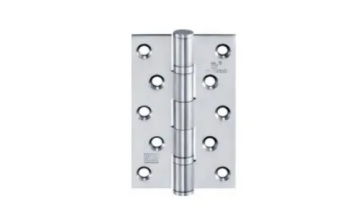
Another major advantage is that stainless steel hinges are often a strong choice for outdoor use and humid indoor environments. This includes:
gates and exterior cabinets
garden storage and utility boxes
outdoor kitchens
bathroom and laundry room installations
marine-adjacent hardware
industrial enclosures in damp conditions
Because stainless steel resists moisture better than many standard plated metals, it is often selected where weather exposure is unavoidable. For most general environments, 304 stainless steel is commonly used and offers good corrosion resistance. For harsher conditions, especially marine or high-chloride environments, 316 stainless steel is generally more corrosion-resistant because of its molybdenum content.
In many products, hinge selection is not only functional—it is also visual. Stainless steel is often chosen because it offers a clean, modern, professional look that fits a wide range of designs. Unlike plated finishes that may chip or wear away at corners, stainless steel’s appearance is more stable because the material itself is the finish.
This makes stainless steel hinges popular for:
modern cabinets and wardrobes
kitchen hardware
visible door hardware
premium storage systems
appliances and metal enclosures
A hinge that keeps its finish over time helps the overall product continue to look well-made and well-maintained.
One of the most practical advantages of a Stainless Steel Hinge is reduced maintenance. In many environments, buyers do not want to repaint hardware, replace rusted hinges, or deal with corrosion marks around mounting points. Because stainless steel is inherently corrosion-resistant, it generally requires less intervention than ordinary steel hardware exposed to moisture.
This can lead to:
fewer replacements
lower long-term maintenance costs
less downtime in commercial or industrial settings
a cleaner user experience in visible applications
For projects with many installed hinges, even small reductions in maintenance can create meaningful long-term savings.
A stainless steel hinge also offers a useful balance between strength, durability, and practical manufacturability. In many hardware applications, the goal is not to find the heaviest or hardest material, but the one that gives reliable performance without creating unnecessary maintenance issues. Stainless steel is often chosen because it can meet that balance well across a broad range of hinge sizes and product categories.
It is especially practical for:
cabinet hinges
butt hinges
industrial box hinges
utility access hinges
marine and outdoor hardware
The result is a hardware option that is versatile enough for both everyday and demanding use cases.
When buyers ask about stainless steel hinges, the next question is often: Which grade should I choose? The two most common answers are 304 and 316.
304 is widely used for general-purpose applications. It offers strong corrosion resistance for many indoor and standard outdoor conditions, making it a common choice for cabinets, doors, furniture, and general hardware.
316 includes molybdenum, which improves corrosion resistance, especially in environments with chlorides such as salt air or marine exposure. It is often preferred for coastal, marine, and more demanding outdoor conditions.
Grade | Best For | Main Advantage |
304 Stainless Steel | General indoor and outdoor use | Strong all-around corrosion resistance |
316 Stainless Steel | Coastal, marine, high-chloride environments | Higher corrosion resistance in harsher conditions |
For many buyers, the right choice depends less on “which is better in general” and more on where the hinge will actually be used.
So, what are the advantages of stainless steel hinges? In practical terms, they offer a strong combination of corrosion resistance, long-term durability, low maintenance, reliable outdoor performance, and a clean, lasting appearance. Because stainless steel gains its corrosion resistance from its chromium-rich passive layer, it continues to perform where many ordinary hinges begin to show wear, rust, or finish breakdown. And when application demands increase, choosing the right grade—such as 304 for general use or 316 for harsher environments—can make the difference between basic hardware performance and long-term reliability.
At www.kaitegao.com, we believe a good hinge should do more than open and close—it should support the durability, function, and overall quality of the product it is installed on. If you are evaluating Stainless Steel Hinge options for cabinets, doors, outdoor hardware, or industrial applications, you are welcome to visit www.kaitegao.com to learn more and explore the right solution for your project.
The main advantages are corrosion resistance, long-term durability, lower maintenance, and better performance in humid or outdoor environments. These benefits come from stainless steel’s chromium-based passive protective layer.
Yes. Stainless steel hinges are commonly used outdoors because they resist moisture and weather exposure better than many plated steel hinges. For harsher coastal conditions, 316 grade is often the stronger choice.
304 is a strong general-purpose stainless steel for many indoor and outdoor uses, while 316 includes molybdenum and is generally more corrosion-resistant in marine or high-chloride environments.
In many applications, yes. Because stainless steel is naturally corrosion-resistant, it usually needs less maintenance than ordinary steel hinges exposed to moisture, especially where rust prevention is a concer