
T: +86-177-2730-8850
E: yashe2002@163.com
E: yashe2002@163.com
Third industrial estate.caobian guangfo road dali nanhai district foshan Guangdong North Road No.4


Views: 0 Author: Site Editor Publish Time: 2026-04-27 Origin: Site


Architects and builders face a persistent challenge when detailing doors for new construction. You must balance modern, flush-finish aesthetics with strict structural reliability and tight installation budgets. Commercial and high-end residential projects increasingly demand minimalist hardware profiles to achieve clean architectural lines. However, traditional pivot mechanisms still offer undeniable, cost-effective utility for heavy-duty applications. Choosing the wrong hardware often leads to sagging doors, blown labor costs, or compromised building security. Procurement teams also need clear frameworks to justify higher upfront capital expenditures when upgrading door specifications. This guide provides a realistic, evidence-based evaluation comparing concealed linkages to traditional exposed knuckles. We will analyze mechanics, installation tolerances, security risks, and total cost of ownership (TCO). You will learn exactly how to specify the right hardware for your next project, ensuring long-term performance and aesthetic success.
Aesthetics vs. Simplicity: Invisible hinges provide a flush 2–3mm gap ideal for modern and frameless designs; butt hinges leave the knuckle exposed but suit traditional architecture.
Adjustability: Premium invisible hinges offer 3D (multi-directional) post-installation adjustability; traditional butt hinges are fixed.
Security: Fully mortised invisible mechanisms eliminate exposed pins, mitigating the risk of forced entry via simple pin-removal tools.
Implementation Risk: Invisible hinges require high-precision milling and deeper door mortises, driving up specialized labor costs compared to the forgiving installation of butt hinges.
Load Dynamics: Single-axis butt hinges typically handle heavy-duty, high-traffic loads more cost-effectively than multi-axis (e.g., 7-axis) invisible hardware, which requires exact weight-matching.
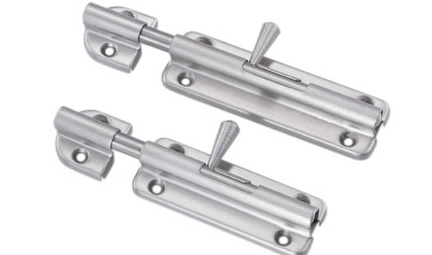
Selecting the wrong Hinges leads to major headaches on the job site. It causes sagging doors, compromised security, or blown labor budgets. You need a reliable framework to match your hardware choices directly to the project scope. Different environments demand entirely different mechanical solutions.
Concealed hardware thrives in environments where aesthetics dictate the design. You should specify an Invisible Hinge for high-end residential builds, concealed rooms, or minimalist commercial spaces. They excel in flush-to-wall door designs requiring exact architectural alignment. Furthermore, they suit environments prioritizing strict security, as they feature no exposed hardware. They also support high energy efficiency by maintaining tighter perimeter seals to prevent draughts.
Traditional exposed knuckles remain the standard for pure utility. Specify them for high-traffic commercial facilities like schools and hospitals. These environments require frequent, low-cost door replacements due to cart impacts and heavy use. They also suit heavy, oversized doors where high load capacity overrides aesthetic concerns. Finally, use them on value-engineered projects operating under tight constraints regarding specialized carpentry labor.
Project Priority | Hardware Recommendation | Primary Rationale |
|---|---|---|
Minimalist Aesthetics & Flush Walls | Invisible Hinge | Creates a seamless 2-3mm gap; hardware vanishes entirely when closed. |
High-Traffic Commercial (Hospitals) | Butt Hinge | Low replacement cost; highly resilient to constant abuse and heavy impacts. |
Maximum Exterior Security | Invisible Hinge | Fully mortised bodies eliminate external pins, preventing forced entry. |
Strict Budget & Schedule Constraints | Butt Hinge | Forgiving installation requires standard tools and basic carpentry skills. |
Understanding the fundamental mechanics behind door hardware helps prevent premature failure. The engineering principles governing traditional and concealed linkages differ significantly.
This traditional design operates on a single-axis fixed pin. It remains exceptionally simple, robust, and highly resilient to vertical shear forces. The knuckles interlock along a single spine. This linear weight distribution makes them incredibly durable under heavy, downward pressure. Installers rely on them when pure mechanical simplicity is the primary goal.
Concealed hardware utilizes complex engineering. It employs a multi-axis articulating linkage system entirely hidden within the door and frame. Most premium models use a 7-axis design. These articulating arms fold inward seamlessly, allowing the door to swing open without a bulky pivot point protruding past the door face.
Mechanical complexity brings both distinct advantages and notable limitations. You must evaluate these trade-offs before specifying multi-axis systems.
The Advantage: Concealed hardware allows 3-way micro-adjustments after installation. You can adjust the vertical height, horizontal alignment, and depth. This saves significant time when correcting building settling or minor door warping.
The Limitation: Multi-point linkages can be highly sensitive to aggressive over-extension. If you fail to pair them with proper floor or wall door stops, forceful hyperextension will bend the internal linkage arms.
Architects evaluate hardware based on safety standards and load ratings. You cannot simply swap an exposed knuckle for a concealed linkage without running proper calculations.
Traditional outward-swinging doors present a massive security flaw. Intruders can easily extract exposed pins using basic tools like a hammer and screwdriver. Once they remove the pins, they just lift the door out of the frame. A fully mortised Invisible Hinge neutralizes this threat completely. It embeds the entire mechanism deep inside the timber or metal core. When the door sits closed, no hardware remains accessible from the outside.
Safety extends beyond forced entry. Exposed knuckles pose everyday risks. They frequently cause clothing snags during furniture moves. More importantly, they create dangerous pinch points for children's fingers. The zero-protrusion profile of concealed mechanisms eliminates these hazards entirely. This makes them highly desirable in luxury homes and specialized care facilities.
You must approach load calculations with strict realism. Traditional hardware distributes weight efficiently along a single thick spine. Manufacturers often enhance this spine using ball bearings or washers to handle massive loads. Concealed linkages demand strict calculation against the exact door weight. You must match the hardware rating perfectly. Overloading a multi-axis system guarantees mechanical failure. It will warp the internal joints and cause irreversible door sag.
Best Practices for Load Management
Always weigh the fully finished door slab, including handles, locks, and decorative glass panels.
Consult the manufacturer's load charts; never assume a heavy-duty concealed model equals a heavy-duty traditional model.
Common Mistake: Relying on standard hollow-core doors for concealed hardware. Hollow doors lack the required internal blocking to secure the deep screws safely.
Procurement teams must look past the initial purchase order. The true cost of door hardware includes specialized labor, potential rework, and long-term maintenance needs.
You must address the hidden cost of modern hardware. Concealed systems demand advanced CNC routing or high-precision jigs for deep mortising. You cannot chisel them out easily by hand. A deviation of just one millimeter can ruin the flush aesthetic. Conversely, traditional knuckles prove highly forgiving to standard carpentry practices. Installers can tweak a traditional mortise on the fly with a simple hand chisel.
An Invisible Hinge dictates specific structural requirements. It requires specific door thicknesses to accommodate deep hardware pockets. Furthermore, you need high-density core materials like solid wood or dense particleboard. If you rout a deep pocket into a cheap, low-density door, the surrounding material will eventually fracture under the swinging weight.
You must balance upfront costs against long-term returns. Compare the low upfront hardware and labor cost of standard knuckles against the higher initial capital needed for concealed systems. Concealed linkages require specialized labor. However, factor in the long-term ROI of 3D adjustability. When a building settles, fixing a sagging standard door requires removing the slab and planning the edge. Fixing a 3D adjustable system takes five minutes with an Allen wrench, saving expensive future maintenance call-outs.
Cost Category | Traditional Knuckle Hardware | Concealed Linkage Hardware |
|---|---|---|
Initial Unit Cost | Low (Mass produced, simple parts) | High (Complex engineering, many parts) |
Labor & Machining | Low (Standard tools, quick mortising) | High (CNC routing, specialized jigs) |
Door Prep Material | Forgiving (Works on most door cores) | Strict (Requires high-density, thick cores) |
Post-Install Adjustment | High Cost (Requires removing the door) | Low Cost (Quick 3D turn with a hex key) |
Facility managers evaluate hardware based on its lifecycle. Proper maintenance ensures doors function smoothly for decades without compromising the building's envelope.
All moving metal parts require specific upkeep. Traditional pins require occasional heavy lubrication. If their screws strip from the wood over time, the door risks serious sagging. Multi-axis linkages operate differently. They require dry silicone sprays rather than wet oils. Wet oils attract dirt. Dry sprays prevent dust buildup inside the complex articulating joints, keeping the motion silent and smooth.
Modern building standards emphasize tight thermal envelopes. The rigid, highly adjustable nature of concealed hardware plays a surprising role here. It maintains a perfect weatherstrip seal around the entire perimeter over time. Because you can micro-adjust the door against the frame, you eliminate small air gaps. This reduces HVAC loss and prevents draughts in highly controlled environments like Passive House builds.
Recommended Maintenance Schedule
First 6 Months: Verify all mounting screws remain fully torqued after initial building settlement.
Annually: Apply dry silicone spray to multi-axis linkage joints; avoid WD-40 or heavy greases.
Bi-Annually: Perform a visual gap inspection. Use the 3D adjustment screws to correct any minor perimeter seal deviations.
Choosing the correct Hinges dictates both the visual success and structural longevity of a door assembly. You should choose traditional hardware for cost-efficiency, extreme heavy-duty commercial loads, and classic aesthetics. Specify concealed systems for premium modern builds, strict security requirements, and projects benefiting from post-installation micro-adjustments. As a next step, advise your procurement teams to calculate exact finished door weights. They must also verify contractor milling capabilities and tool availability before committing to a concealed hardware schedule.
A: The industry rule of thumb dictates one hinge per 30 inches of door height. For example, a standard 60-90 inch door requires three hardware units. You must adjust this baseline upward based on high material density and the total slab weight.
A: Premium concealed hardware can easily achieve a full 180-degree swing. However, abutting trim or thick baseboards often physically restrict this path. In these situations, you may occasionally require specialized projection hardware to clear the architectural obstacles.
A: Generally, no. Standard pre-hung frames typically lack the required structural mortise depth to house complex concealed linkage bodies safely. Installing them requires custom CNC routing and thicker core materials to maintain the frame's integrity.