
T: +86-177-2730-8850
E: yashe2002@163.com
E: yashe2002@163.com
Third industrial estate.caobian guangfo road dali nanhai district foshan Guangdong North Road No.4


Views: 0 Author: Site Editor Publish Time: 2026-04-29 Origin: Site


Upgrading to or specifying an Invisible Hinge system shifts the focus from simple aesthetics to precise architectural engineering. You are no longer just hanging a standard panel; you are integrating a complex moving mechanism into a seamless wall surface. Hardware failures in concealed setups often stem from miscalculated dynamic loads, poor material selection, or ignoring strict installation tolerances. When components fail, the result is sagging doors, binding frames, or catastrophic hardware collapse.
A systematic approach to evaluating weight capacities, structural types, and material grades ensures seamless functionality. It guarantees long-term durability and minimizes the total cost of ownership (TCO) for any building project. We will show you exactly how to assess loads, select the right mechanisms, and secure structural longevity.
Always calculate total door weight (including cladding and attachments) and add a minimum 25% safety margin for dynamic loads.
Match the hinge type (European, Mortise, or Pivot) to the cabinet/door framework (frameless vs. face-frame) and expected usage volume.
Prioritize 3-way adjustability to mitigate future building settlement and reduce labor costs during installation.
Demand commercial-grade testing data (e.g., 300,000 cycle testing) and appropriate material grades (304/316 stainless steel) for high-traffic or damp environments.
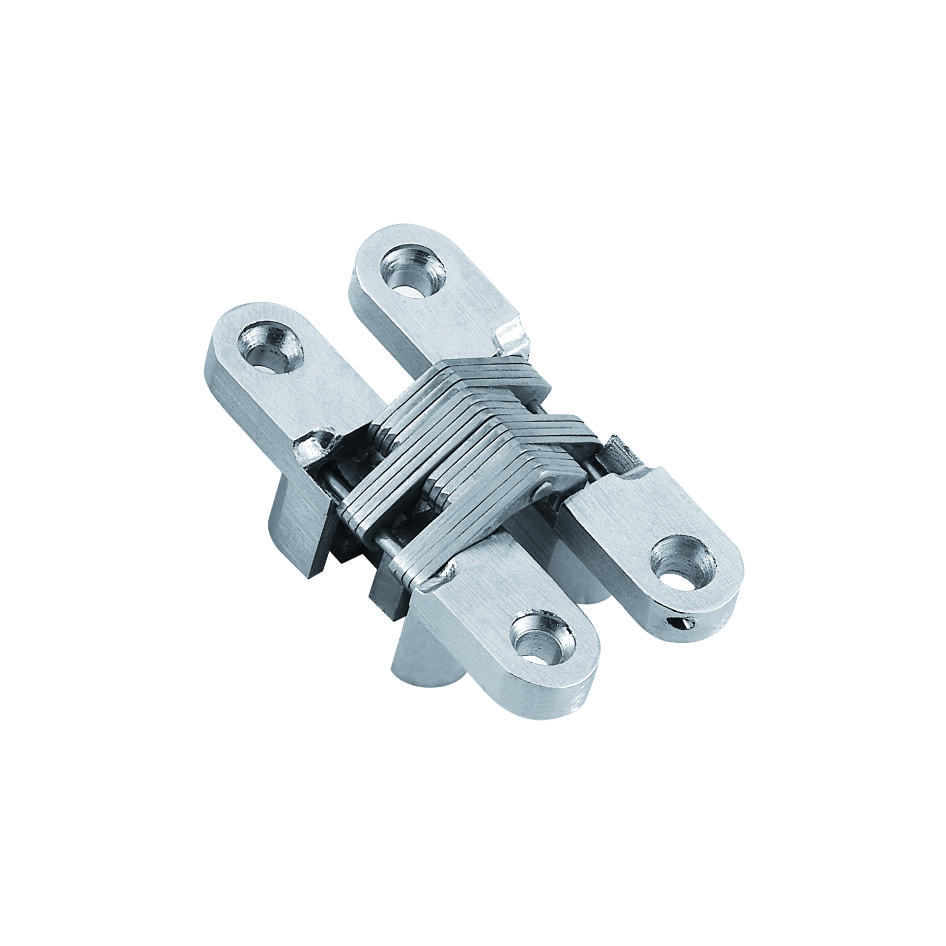
Before you purchase any concealed hardware, you must define the physical limitations of your project. Many installers make the critical error of estimating loads based on visual size rather than engineering math. You must evaluate the raw physical forces acting on your doorway.
Never buy hardware based solely on the raw weight of the door core. Builders frequently underestimate the final operating weight because they forget secondary additions. You must calculate the core material, surface cladding (such as heavy mirrors, stone slabs, or thick wood veneers), and potential added payload. For example, a hidden bookcase door will eventually hold dozens of heavy books.
Once you determine this maximum total weight, you must add a 25% safety margin. This buffer accounts for dynamic swinging forces. When a heavy door swings open, momentum creates torque. This torque magnifies the stress on the mounting plates. The 25% safety factor ensures the hardware handles these sudden kinetic loads without snapping.
Specialty doors experience significant shifts in their center of gravity during operation. A hidden library door does not distribute its weight evenly. As you push it open, the load shifts away from the frame, pulling outward on the top mechanisms while pushing inward on the bottom.
Standard side-mounted hardware degrades rapidly under this type of rotational stress. In these scenarios, multi-point mortise units or heavy-duty pivot systems perform much better. They anchor deeply into the wood grain, resisting the twisting shear forces that easily strip standard screws from surface mounts.
You must establish whether your application involves a face-frame or frameless (box-style) construction. This immediately dictates the mounting plate logic and spatial clearances required.
Frameless Cabinets: These offer a flat interior surface. They easily accommodate standard cross-mounting plates.
Face-Frame Cabinets: These feature a dimensional lip around the opening. They require specialized mounting plates or compact block designs to bridge the spatial gap.
Choosing the correct mechanism dictates how smoothly your door will operate over the next decade. Not all concealed systems serve the same purpose. You must align the structural category with your specific architectural needs.
The market primarily divides concealed hardware into three distinct categories based on load and installation method.
European Hinges (One-piece vs. Two-piece): These are best for standard casework and cabinetry. Two-piece models feature a separate mounting plate and arm, making them highly adjustable. You must compare long-arm designs (for full overlay) against compact designs (for tight face-frame overlays) based on your clearance requirements.
Mortise/SOSS-Style: These are ideal for high-end residential and commercial secret doors. They require precise routing to sink the body entirely into the door edge. However, they offer maximum security because they are completely tamper-proof when closed. They also provide superior load-bearing capacity for solid-core slabs.
Pivot Systems: These serve as the necessary fallback for ultra-heavy architectural doors exceeding 150 lbs. When lateral wall attachments risk tearing out under immense weight, pivot systems transfer the load vertically into the floor and ceiling headers.
Hinge Type | Ideal Load Range | Primary Application | Security Level |
|---|---|---|---|
European (Cup) | 10 - 40 lbs (per door) | Standard kitchen/bath casework | Low (Interior use) |
Mortise (SOSS-Style) | 40 - 150 lbs | Secret doors, high-end residential passages | High (Tamper-proof when closed) |
Pivot System | 150 - 500+ lbs | Ultra-heavy architectural or stone-clad doors | High (Vertical load transfer) |
Beyond the structural frame, you must evaluate the operational feel of the door. The closing mechanism significantly impacts user experience and daily safety.
Soft-Close vs. Self-Close: You must evaluate your priorities. Soft-close mechanisms feature hydraulic dampers. They provide anti-slam safety, protecting fingers and preventing loud impacts. Self-close mechanisms utilize spring tension. They automatically latch the door shut when it reaches a 20-degree open angle, ensuring pets or drafts do not leave the door ajar.
Free Swing: This is the optimal choice when pairing hardware with push-latches or magnetic rebounders. If you want a true "handle-less" hidden door, resistance will interfere with the push-to-open action. Free swing allows the mechanical latch to do all the work.
Hardware fails when specifiers choose the wrong material for a demanding environment. You must look beyond the shiny finish and analyze the underlying metallurgy.
We strongly warn against using zinc alloy components for heavy-load applications. While zinc is cost-effective and easy to cast, it suffers from accelerated metal fatigue. Under repetitive shear stress, zinc micro-fractures over time. Eventually, the casting snaps, leading to sudden and catastrophic door failure. Reserve zinc components strictly for lightweight residential cabinetry.
Environmental factors dictate metal grades. You must differentiate between various steel alloys to prevent rapid oxidation.
304 Stainless Steel: This is the standard for commercial settings and typical interior wet zones like bathrooms or kitchens. It resists standard household moisture effectively.
316 Stainless Steel: This grade is mandatory for coastal environments, outdoor kitchens, and high-salinity areas. The addition of molybdenum gives it superior resistance to pitting and salt corrosion.
You must guide specifiers and contractors to look for objective certification data. Demand cycle testing certifications. A reputable manufacturer will provide data showing their product survived 300,000 commercial operating cycles without failure. Furthermore, look for UL fire ratings (up to 3 hours). This ensures building code compliance for commercial fire-rated passages and dramatically mitigates your liability.
High-quality concealed hardware serves as a valuable sustainability asset. Cheap surface-mounted alternatives often leave uneven gaps around the frame. Precision mortised units create tighter closing tolerances. These tight seals prevent draughts from moving between rooms and significantly reduce HVAC thermal loss. In modern eco-friendly construction, eliminating air leaks directly improves a building's overall energy efficiency.
Hardware procurement costs only represent a fraction of the total project expense. Labor hours dictate the true total cost of ownership. Smart hardware choices slash installation time and eliminate expensive maintenance callbacks.
Cheaper hardware always costs more in labor. When you buy basic fixed plates, installers spend hours shimming and rehanging doors to achieve perfect reveals. You should detail how three-dimensional adjustment directly impacts profitability. Modern systems allow you to adjust the door along three axes using a simple screwdriver:
Vertical: Raises or lowers the door to clear the floor.
Horizontal: Moves the door left or right to fix uneven side gaps.
Depth: Pushes the door in or out to sit flush with the surrounding wall.
This 3-way capability compensates for immediate installation errors. More importantly, it allows maintenance teams to easily correct sagging caused by future building settlement without ever removing the hardware.
We highly recommend "lift-off" or separable designs for large doors. These systems allow you to install the frame mounting plates and the door-side cups entirely independently. Once both sides are secure, a single installer can lift the heavy slab and snap it onto the frame plates. This innovation drastically reduces multi-person labor hours on active job sites.
Upgrading old exposed hardware to a modern concealed system introduces strict retrofitting constraints. You cannot simply swap the screws. The process requires highly precise routing. Installers must use sharp Forstner bits to bore perfectly flat-bottomed cups into the wood. You must adhere to exact 45mm spread measurements between screw holes. Additionally, you must maintain strict 3-5mm tab distance (edge margin) tolerances. If you drill the cup too far from the edge, the door will bind against the frame before it can open.
Before you finalize your hardware schedule, use this checklist to verify your specifications. A single missed detail here will derail your installation.
You must confirm exact measurements for your door overlay to prevent binding.
Full Overlay: The door completely covers the cabinet box edge.
Half Overlay: The door covers half the partition, sharing the edge with a neighboring door.
Inset: The door sits entirely flush inside the cabinet frame.
Buying a full overlay mechanism for an inset application guarantees the door will not close.
Never guess how many units a door needs. Establish the baseline: standard lightweight cabinet doors require 2 units per door. However, variable triggers dictate upgrading to 3 or 4 units per door.
Door Height (Inches) | Door Weight (Lbs) | Recommended Quantity |
|---|---|---|
Up to 39" | Up to 15 lbs | 2 Units |
40" to 60" | 16 - 30 lbs | 3 Units |
61" to 80" | 31 - 45 lbs | 4 Units |
81" and taller | 46+ lbs | 5 Units (or Pivot System) |
If your door is unusually wide, the center of gravity shifts further out, creating excessive leverage. Always add an extra unit to counter the increased rotational torque of a wide door.
Sourcing unreliable hardware jeopardizes the entire build. We offer actionable advice on selecting suppliers. Require comprehensive technical schematics before you buy. Ask for long-term warranty data. Most importantly, demand proof of lifecycle testing before authorizing bulk purchasing. If a vendor cannot provide an engineering spec sheet, you must find a different supplier.
Choosing an Invisible Hinge is a structural decision first and an aesthetic decision second. Hiding the mechanism behind the casework forces it to work harder in tighter spatial constraints. To guarantee success, keep these final points in mind:
Over-engineer your load capacity. Adding that 25% safety margin prevents catastrophic door failure under dynamic stress.
Invest in 3-way adjustable, stainless-steel hardware. The higher upfront material cost yields the lowest total cost of ownership by drastically cutting installation and maintenance labor.
Match the opening mechanism strictly to your daily use case, prioritizing free-swing for push-latches or soft-close for heavy traffic zones.
Audit your current door dimensions and estimated weights today. If your load calculations fall close to maximum thresholds, contact a specialized hardware engineer with your specific project constraints for a tailored component list.
A: The baseline is two per standard door. However, you must follow the height-to-weight ratio rule. Doors up to 39 inches tall and 15 pounds need two. If your door reaches 60 inches or 30 pounds, use three. Doors up to 80 inches or 45 pounds require four. Always add one extra if the door is unusually wide.
A: Yes, but it requires precise carpentry. You must bore flat-bottomed holes using a Forstner bit to house the new cups. You also need to measure strict edge margins (usually 3-5mm) and fill the old screw holes. It is highly manageable for experienced DIYers with the right jigs.
A: Your hardware will likely fail prematurely. Static weight differs from dynamic load. When you swing a heavy door, momentum creates torque that multiplies the stress on the mounting plates. We strongly advise applying a 25% safety margin to your calculations to prevent metal fatigue and sagging.
A: You do not need to remove the door. Open it and locate the precise adjustment screws on the hinge arm or mounting plate. Turn the vertical screw to lift the door, the horizontal screw to correct side-to-side alignment, and the depth screw to bring it flush with the frame.